Orthodontics in central Munich – for adults and children
Orthodontics corrects the position of teeth and jaws – crooked or crowded teeth, gaps, an overbite or a crossbite, for instance. Depending on your particular situation, we may suggest clear aligners, fixed braces with brackets or a removable brace.
One real advantage of our practice at Gärtnerplatz is that general dentistry and orthodontics are offered under one roof. We have worked closely with orthodontic treatment for many years, so there is no need to travel to a separate specialist, and your dental care and orthodontic treatment can be planned hand in hand.
What can orthodontics help with?
Straight teeth are about more than appearance. A misaligned bite can affect how you chew, bite and speak. Crowded or overlapping teeth are also harder to keep clean, which may raise the risk of tooth decay and inflamed gums.
The most common problems include:
- Crowding: there is too little room in the jaw, so teeth become rotated or overlap.
- Gaps: there are visible spaces between the teeth.
- Overbite (overjet): the upper front teeth sit noticeably ahead of the lower ones.
- Deep bite: the upper front teeth overlap the lower ones by a great deal.
- Crossbite: some upper teeth bite behind the lower teeth rather than in front of them.
- Open bite: in one area, the teeth do not meet when you close your mouth.
Our treatment options
Aligners – clear, removable trays
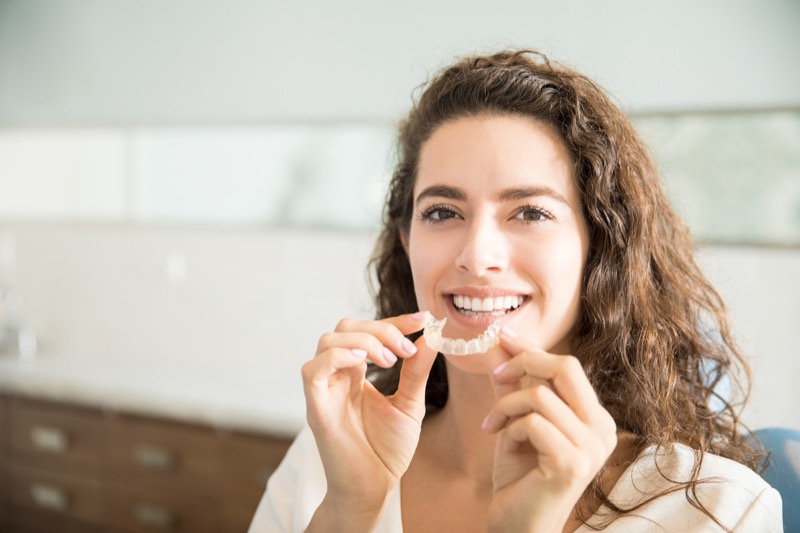
Aligners are almost invisible, removable plastic trays. Each treatment begins with a digital scan of your teeth, from which the tooth movements are planned on a computer. A new aligner is made for every stage, gently guiding the teeth towards their planned position. You simply take the aligners out to eat and to clean your teeth; for them to work, they need to be worn for most of the day. You can read more on our aligners page.
Fixed braces with brackets
With fixed braces, small attachments known as brackets are bonded to the teeth and linked by a fine archwire. Fixed braces are well suited to more complex tooth movements and remain one of the most tried-and-tested methods in orthodontics.
Removable braces for children
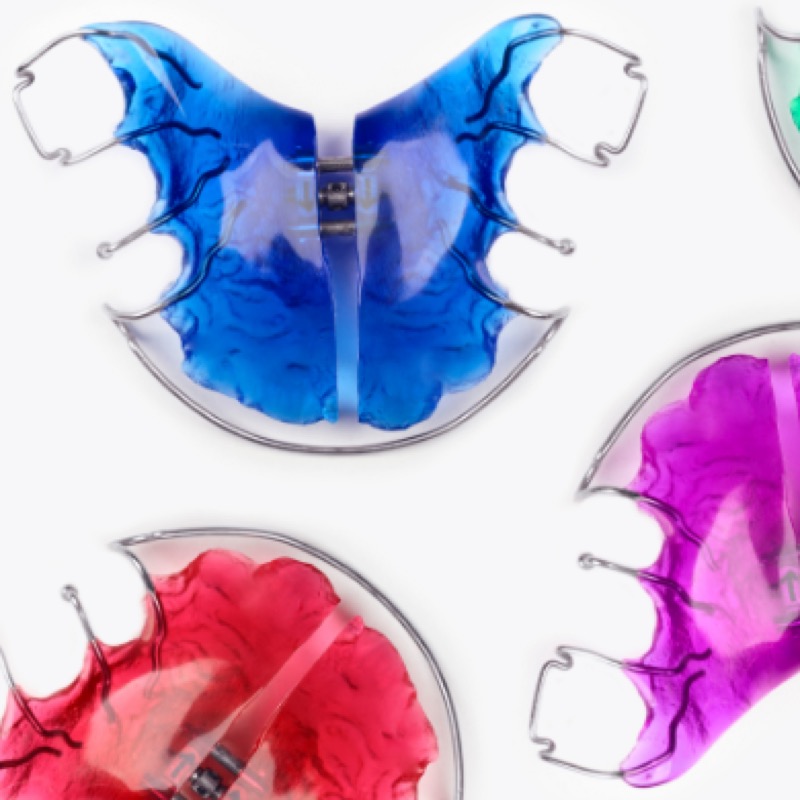
While a child's jaws are still growing, a removable brace can guide that growth and make room for the permanent teeth. You will find more details under orthodontics for children.
What does orthodontic treatment involve?
- Consultation and examination: at your first appointment, we look carefully at your teeth, jaws and bite, and talk through what you would like to achieve.
- Diagnosis: we use the methods of modern dentistry. Depending on the question at hand, we record your teeth either with a digital scanner or with classic impressions, from which models of your jaws are made. For some diagnoses these models are especially helpful, as the position of the teeth and the bite can be assessed directly on them. Where the findings call for it, we also take photographs and X-rays.
- Treatment plan and costs: on this basis, we draw up a treatment plan tailored to you and let you know what costs to expect.
- Active treatment: the brace or aligners gradually move your teeth into the desired position. We keep an eye on your progress at regular check-ups.
- Retention: once active treatment is complete, the result is held in place with a retainer.
Orthodontics for adults
Teeth can be moved at any age, so it is never too late to have their position corrected. With aligners, treatment can be barely noticeable, whether at work or in your private life.
Orthodontic treatment can also be a sensible first step before restorative work – to make room for an implant or a crown, for instance, or to straighten tilted teeth. As we offer both at our practice, we can plan these stages together.
Orthodontics for children and teenagers
In children and teenagers the jaws are still developing, and this natural growth can be put to good use during treatment. A first orthodontic check is often worthwhile at primary-school age, when the first permanent teeth come through. In certain cases, earlier treatment may also be advisable.
For older children and teenagers, fixed braces or aligners may also be an option alongside removable braces, depending on their situation.
After treatment: keeping your result
Once active treatment has finished, teeth tend to drift back towards their original position. To preserve the result in the long term, we use retainers, and we offer both kinds: a fixed retainer – a thin wire bonded discreetly to the inner surface of the front teeth – and removable retainer trays, which are usually worn at night. We will discuss with you which option suits you best.
Frequently asked questions about orthodontics
At what age is a brace worth considering?
A first check is often useful at primary-school age, when the first permanent teeth are coming through. When treatment should actually begin depends on the kind of misalignment. There is no upper age limit: teeth can still be straightened in adulthood.
How long does orthodontic treatment take?
That depends on your starting point, the method chosen and your cooperation. Minor corrections may take only a few months; more extensive treatment often takes one to two years, sometimes longer. Once we have examined you, we can give you a realistic estimate.
Will a brace hurt?
The treatment itself is not usually painful. That said, a feeling of pressure on the teeth is quite normal after a brace has been fitted or adjusted, or when you move on to a new aligner. This usually settles within a few days.
Aligners or fixed braces – which would suit me better?
That depends on the kind of misalignment and on your own preferences. Aligners are barely visible and removable, but they do call for discipline in wearing them. Fixed braces work regardless of your cooperation and are also suited to complex tooth movements. We would be happy to discuss which approach makes sense for you at your consultation.
Will my health insurance cover the costs?
For children and teenagers with statutory health insurance, the insurer covers the costs if the misalignment reaches a defined level of severity. The personal contribution of 20 per cent – or 10 per cent for each additional child if siblings are treated at the same time – is refunded once treatment has been successfully completed. For adults, statutory health insurance pays only for severe jaw misalignments that also require oral and maxillofacial surgery. Extras such as particularly discreet brackets are usually paid for privately. If you are privately insured, reimbursement depends on your individual policy.
Can I eat normally with a brace?
Aligners come out at mealtimes, so you can generally eat whatever you like. With fixed braces, it is best to avoid very hard or sticky foods, as these can loosen brackets. Either way, careful oral hygiene is important.
Do I need to go to a separate practice for orthodontics?
No. At our practice at Gärtnerplatz, you receive general dentistry and orthodontics under one roof, which allows us to coordinate your dental and orthodontic care directly.
Book a consultation